If you paid penalties or interest to the Internal Revenue Service (IRS) between early 2020 and mid-2023 — for a late return, a missed payment, or an underpayment during the pandemic years — there is a realistic chance the federal government collected money it had no legal right to take.
That’s not an opinion. It’s the conclusion of a federal court ruling that tax attorneys say has created one of the broadest potential refund opportunities in recent IRS history. The people who benefit will be the ones who file a claim before July 10, 2026. Everyone else loses the right permanently, regardless of how the courts ultimately rule.
IRS Penalties: Who Is Actually Affected Here
The affected population is not a niche group. Erin Collins, the independent National Taxpayer Advocate — a statutory watchdog embedded within the IRS itself — has stated publicly that “tens of millions of taxpayers” may actually qualify for refunds or reductions.
That includes individuals who filed a day late, small business owners who missed an estimated payment, and larger companies that accumulated penalties across multiple tax types during the pandemic period.
The Tax Years at Issue Are 2019, 2020, 2021, and 2022
The penalties in question are the ones most people have encountered at some point: the failure-to-file penalty, which runs 5% of unpaid taxes per month up to 25%; the failure-to-pay penalty, at 0.5% per month up to 25%; and the interest that compounded on top of both.
For a taxpayer who owed $15,000 and paid several months late during 2021, those charges could represent thousands of dollars in assessments that are now legally contested.
The Legal Basis, Explained Without the Jargon
A provision of the tax code — Section 7508A(d) — requires that filing and payment deadlines be postponed during a federally declared disaster period, plus 60 days after it ends. The COVID-19 national emergency lasted from January 20, 2020, through May 11, 2023. Add 60 days, and you reach July 10, 2023.
The court’s reasoning in Kwong v. United States is straightforward: if no deadline legally existed during that window, then nothing filed or paid within it could be considered “late.” And if nothing was late, the IRS had no statutory basis to charge late penalties or the interest that flows from them. Several tax attorneys have extended this logic further, arguing that even obligations that originated before the disaster period began may have been improperly penalized once the emergency declaration was in effect.
Why the Government Is Appealing — and Why That Doesn’t Change Your Deadline
The U.S. Treasury Department has formally disagreed with the ruling and is expected to pursue appeals. Tax litigators who follow federal claims cases say this could wind through the circuit courts for years before reaching a final resolution — potentially not until 2028 or later.
Here is the critical point that most people miss: the appeal does not pause your deadline. Under standard federal tax law, taxpayers have three years from the original filing deadline — or two years from the date they actually paid — to submit a refund claim, whichever comes later. Because Kwong moved the effective filing deadline for 2019–2022 returns to July 10, 2023, the three-year window closes on July 10, 2026. That date holds whether the IRS wins its appeal or loses it.
Tax attorney Alyssa Maloof Whatley, a director at Frost Law, put it directly: “If you don’t file, you won’t be eligible for any benefit.” There is no automatic relief program. The IRS will not reach out to affected taxpayers. The burden is entirely on the individual.
Key Steps and Deadlines
| Step | Action Required | Deadline / Timeframe |
|---|---|---|
| Pull IRS transcript | IRS.gov Individual Online Account or call 800-908-9946 | As soon as possible |
| Transcript by mail | Request online or by phone; arrives in 5–10 business days | Allow 2-week buffer |
| Identify penalties & interest | Review transcript for tax years 2019–2022 | Before filing Form 843 |
| Complete Form 843 | Write “Protective Refund Claim Pursuant to Kwong Case” at top | Before July 10, 2026 |
| Mail Form 843 | Certified mail with return receipt to your IRS service center | Postmarked by July 10, 2026 |
| Statute of limitations closes | No claims accepted after this date | July 10, 2026 |
| Appeals resolution (estimated) | Litigation may take 2–5 more years | 2027–2031 |
| IRS refund processing (if upheld) | Paper claims only; no electronic filing option available | 1–2+ years after filing |
How to File a Protective Claim Before the Deadline
A protective refund claim is a formal legal placeholder. You are not demanding immediate payment — you are notifying the IRS that you are preserving your right to a refund while the underlying litigation plays out. If Kwong is ultimately upheld, your claim stays in the system. If the government prevails, nothing changes for you financially.
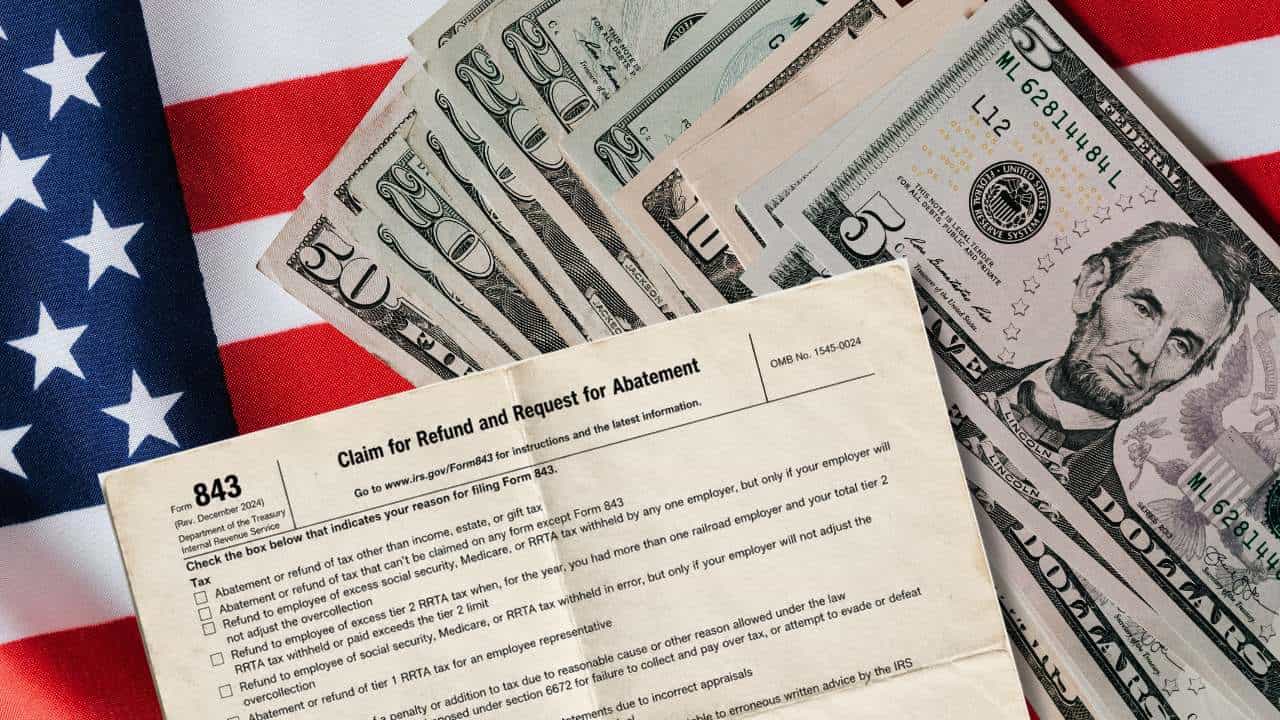
The form is IRS Form 843, officially titled “Claim for Refund and Request for Abatement.” Write “Protective Refund Claim Pursuant to Kwong Case” across the top. Specify that the claim is based on the COVID-19 disaster period and Section 7508A(d). File a separate Form 843 for each tax year involved, and mail it certified with return receipt to the IRS service center where you normally file your current-year return.
To find out what you were actually charged, request your IRS tax account transcript for each year from 2019 through 2022. These are available free through the Individual Online Account at IRS.gov, or by calling the automated transcript line at 800-908-9946. Transcripts ordered by mail arrive within five to ten business days.