The case is Kwong v. United States, decided by the U.S. Court of Federal Claims. Judge Molly Silfen ruled that the COVID-19 pandemic, as a federally declared disaster, automatically extended tax filing and payment deadlines for the entire 3.5-year duration of the emergency — not just for one year, as the Internal Revenue Service (IRS) had previously maintained through its own regulations.
The practical consequence is significant. Under the court’s reasoning, no federal tax return or payment was legally “late” until after July 10, 2023. That means the IRS had no legal basis to assess failure-to-file penalties, failure-to-pay penalties, or interest charges on anything filed or paid between January 20, 2020, and that date.
For businesses that were hit with those assessments — and the IRS collected billions of dollars in them — a refund or abatement may now be available.
The deadline to file a refund claim is July 10, 2026
The window is not automatic. The IRS does not issue refunds unless a taxpayer formally requests one, and the standard statute of limitations applies: three years from the date the return was filed, or two years from the date the tax or penalty was paid, whichever is later.
For most taxpayers whose returns fell within the COVID disaster period, that three-year clock traces back to July 10, 2023 — the date the IRS should have treated as the actual due date. That places the deadline at July 10, 2026.
Businesses may act now
“Unless the IRS or Congress acts to ensure all affected taxpayers will receive refunds if the Kwong decision is upheld, taxpayers seeking refunds for penalties and interest they paid relating to that period will, in most cases, need to file claims by July 10, 2026,” wrote Erin Collins, the National Taxpayer Advocate, in a blog published by the IRS’s independent watchdog office.
Collins has made this issue a priority, publishing a three-part series urging taxpayers — including business owners — not to wait.
The scope of who qualifies is broader than most people assume. Affected taxpayers include individuals, small businesses, large corporations, estates, and trusts. The issue applies across multiple tax types: income, employment, estate, gift, and excise taxes. Businesses that filed late international information returns during the pandemic may also have a claim, since those filings can carry large penalties even when no underlying tax was owed.
Kwong Theory Could Unlock Billions in IRS Refunds
In fiscal year 2022 alone, the IRS assessed more than 16 million failure-to-pay penalties totaling over $12 billion. The agency had previously refunded about $1.2 billion in penalties to roughly 1.6 million taxpayers under a narrower 2022 relief notice, but tax professionals say the Kwong theory reaches a far larger population.
Early estimates from tax practitioners suggest that individual business owners facing the most exposure could see five-figure refunds. The exact amount depends on what was assessed and when it was paid.
There is a separate but related deadline for businesses that received a formal denial of an Employee Retention Credit claim. The IRS recently announced that businesses waiting on a response to a disallowance notice — issued as Letter 105-C or 106-C — can now file Form 907 to extend the two-year window for administrative review or litigation. The IRS described this as a response to cases where agency processing delays were pushing taxpayers past their legal deadline through no fault of their own.
Are refunds guaranteed?
Filing a claim under Kwong does not guarantee a refund. The government has signaled it will appeal the ruling. As of early May 2026, the parties in Kwong were finalizing a stipulated judgment that would allow the Department of Justice to appeal to the U.S. Court of Appeals for the Federal Circuit. A final resolution could take years.
But that is precisely why acting before July 10 matters. The mechanism available now is a “protective refund claim” — a formal filing that preserves the taxpayer’s legal right to a refund if the courts ultimately uphold the Kwong decision, even if that happens years from now. Without it, the statute of limitations expires and the claim is lost permanently, regardless of how the litigation resolves.
Claiming a COVID refund
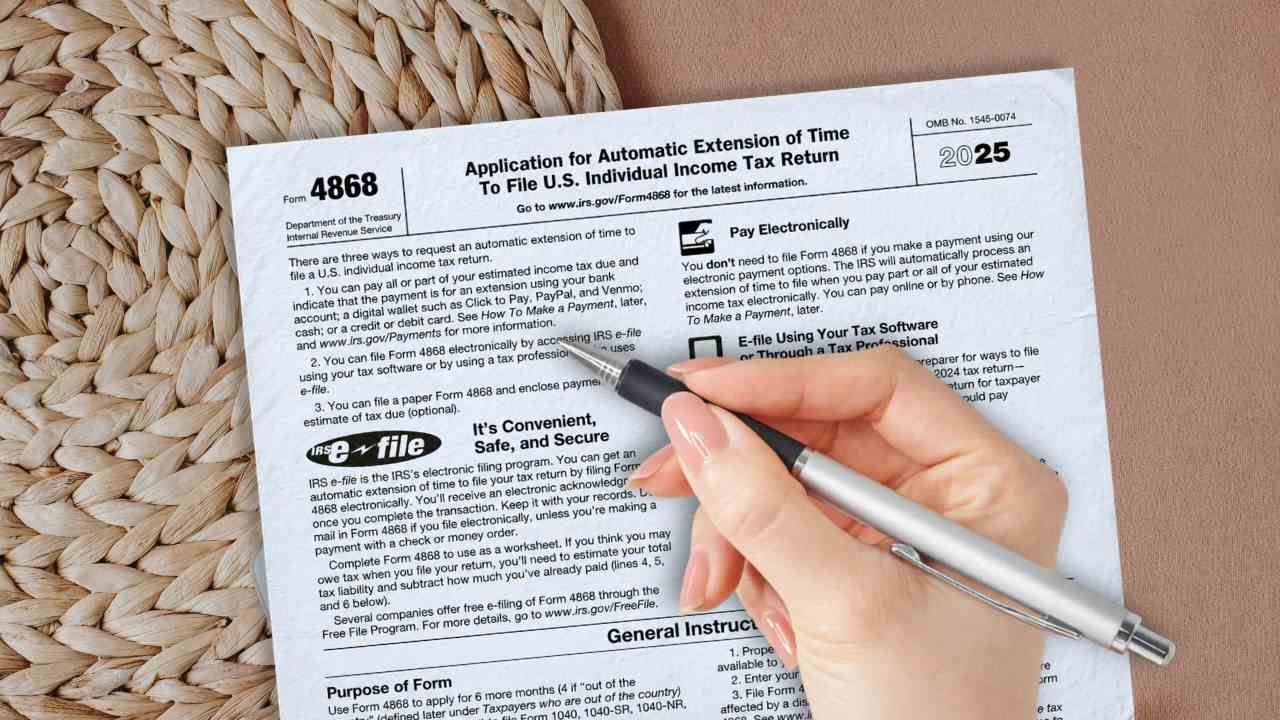
To file, taxpayers use Form 843, Claim for Refund and Request for Abatement. The form must be submitted on paper and mailed — there is no electronic option currently available. Collins has publicly called on the IRS to build an online portal to handle what she expects will be a large volume of submissions.
The National Taxpayer Advocate recommends sending the form by certified mail to preserve proof of timely filing. When completing the form, the NTA advises taxpayers to write “Protective Refund Claim Pursuant to Kwong Case*”* across the top and include as much detail as possible about the penalties or interest at issue.
The first step for any business owner is pulling an IRS tax account transcript for the relevant years — 2019 through 2022 — and looking for penalty or interest charges assessed between January 20, 2020, and July 10, 2023. Those transactions are the starting point for calculating what may be recoverable.