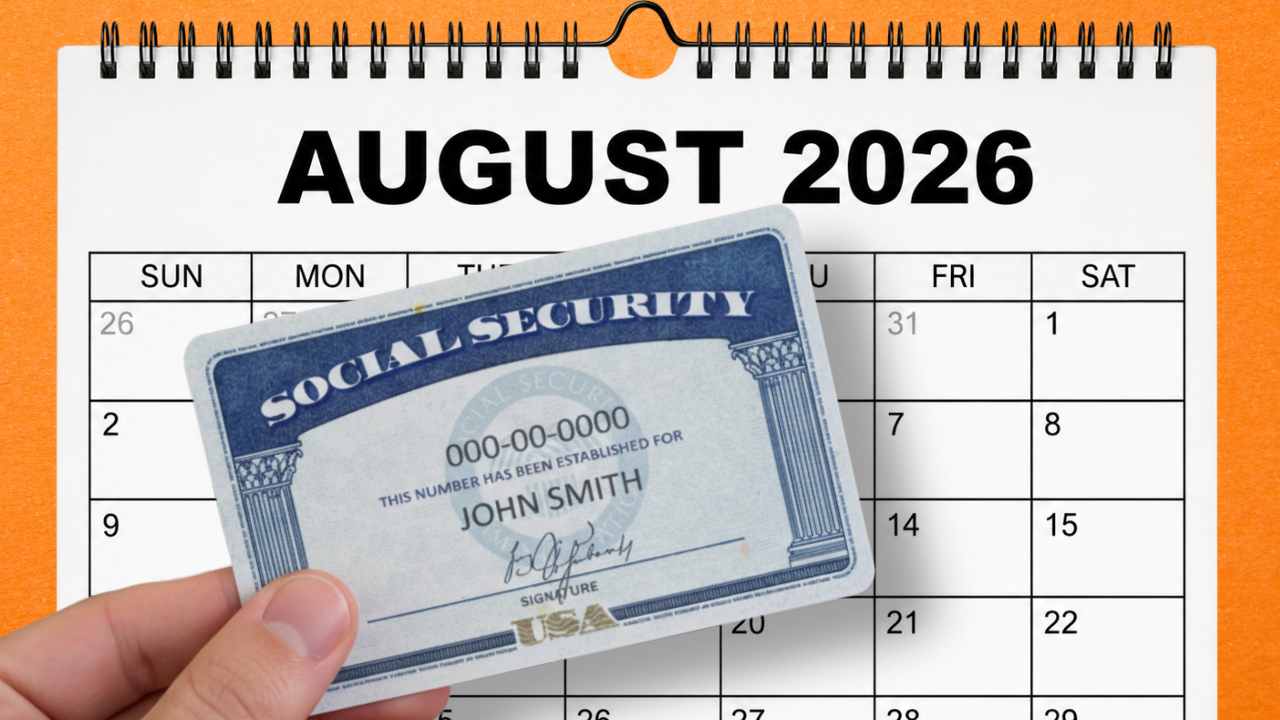
Most people applying for Social Security in 2026 make the same miscalculation: they expect a check the month they sign up. That’s not how the system works — and the gap between what you expect and what actually happens can leave a new retiree short on cash at the worst possible moment.
The Social Security Administration (SSA) pays benefits in the month after the month they are due. If your benefits are set to begin in August 2026, your first deposit won’t land until September. That is built into the system, not a processing delay.
It gets more specific than that: What’s coming with your Social Security benefit
The exact date of that September payment depends on your birthday. People born between the 1st and 10th of any month receive payment on the second Wednesday. Those born between the 11th and 20th get paid on the third Wednesday.
Anyone born between the 21st and 31st waits until the fourth Wednesday. For that last group, an August 2026 benefit could realistically arrive as late as the final days of September — nearly two full months after they stopped working. Plan your cash reserve around that window, not around the date you file.
Turning 62 doesn’t automatically make you eligible that month
The SSA requires applicants to be 62 years old for the entire calendar month to qualify for benefits during that month. Only people born on the 1st or 2nd of a month meet that threshold in their birth month. Everyone else becomes eligible the following month. If you were born on October 15, your earliest eligible start month is November.
This matters because the month you designate as your start month is the month the SSA uses to calculate your first payment cycle.
Warning: Filing early locks in a permanent reduction
Claiming at 62 is legal. It is also expensive over a lifetime. The penalty for filing before your Full Retirement Age (FRA) can reach 30% of your monthly benefit — permanently.
For anyone born in 1960 or later, the FRA is now 67. That threshold became final in November 2026, closing a 42-year phase-in that began with the 1983 Social Security Amendments. There is no further increase scheduled.
Waiting past 67 adds more. For every month beyond the FRA point that you delay — up to age of 70 years old— your monthly benefit grows by two-thirds of one percent, which compounds to an 8% increase per full year. A person who delays from 67 to 70 increases their base benefit by roughly 24%. That difference, multiplied across 15 or 20 years of payments, is substantial.
Working while collecting before 67 triggers a penalty
If you claim Social Security before reaching your Full Retirement Age and continue earning income from work, the SSA applies what is called the retirement earnings test. In 2026, the threshold is $24,480 per year. For every two dollars earned above that limit, one dollar is withheld from your benefit.
In the year you reach FRA age, the limit rises to $65,160, and the deduction drops to one dollar for every three dollars over the threshold. Once you actually reach FRA, the earnings test disappears entirely.
The withheld money is not gone permanently. The SSA recalculates your benefit once you reach FRA and credits the months that were reduced. But the cash flow interruption is real, and it catches people off guard.
Your benefit is built on 35 years of earnings — zeros included
The SSA calculates your retirement benefit using an average of your highest 35 years of inflation-adjusted earnings. If you worked fewer than 35 years, the missing years count as zero and pull the average down. Each additional high-earning year replaces a lower one in that calculation.
Before filing, verify your earnings record. The SSA maintains a statement through its online portal, and errors in reported earnings — a missed year, a misreported salary — directly reduce your monthly payment. Corrections before filing are far simpler than corrections after.
The 2026 numbers every applicant should know before filing
The cost-of-living adjustment (COLA) for 2026 is 2.8%, raising the average monthly retirement benefit from $2,015 to approximately $2,071. The Medicare Part B standard monthly premium rose from $185 to $202.90 — a 9.7% increase. For beneficiaries who have Medicare premiums deducted from their Social Security payment, a meaningful portion of the COLA increase is offset immediately.
The taxable wage cap for 2026 sits at $184,500, up $8,400 from 2025. The work credit threshold rose to $1,890 per credit, and the annual earnings limit for pre-FRA beneficiaries is confirmed at $24,480.
Separately, the “One Big Beautiful Bill Act” introduced a $6,000 federal tax deduction for eligible adults 65 and older, in effect through 2028, regardless of whether the individual receives Social Security benefits.
Apply four months before you want payments to start
The SSA allows applicants to file up to four months before their intended benefit start month. That window exists for a reason: processing takes time, document verification takes time, and errors add more. Applying in advance does not move up your payment date — it prevents delays in hitting it.
Gather your documents before you sit down to file: original birth certificate or equivalent proof of age, Social Security number, proof of citizenship or legal status if born outside the U.S., military discharge papers if you served before 1968, and your most recent W-2 or self-employment tax return. Photocopies are acceptable for most items. The birth certificate and citizenship documentation must be originals.