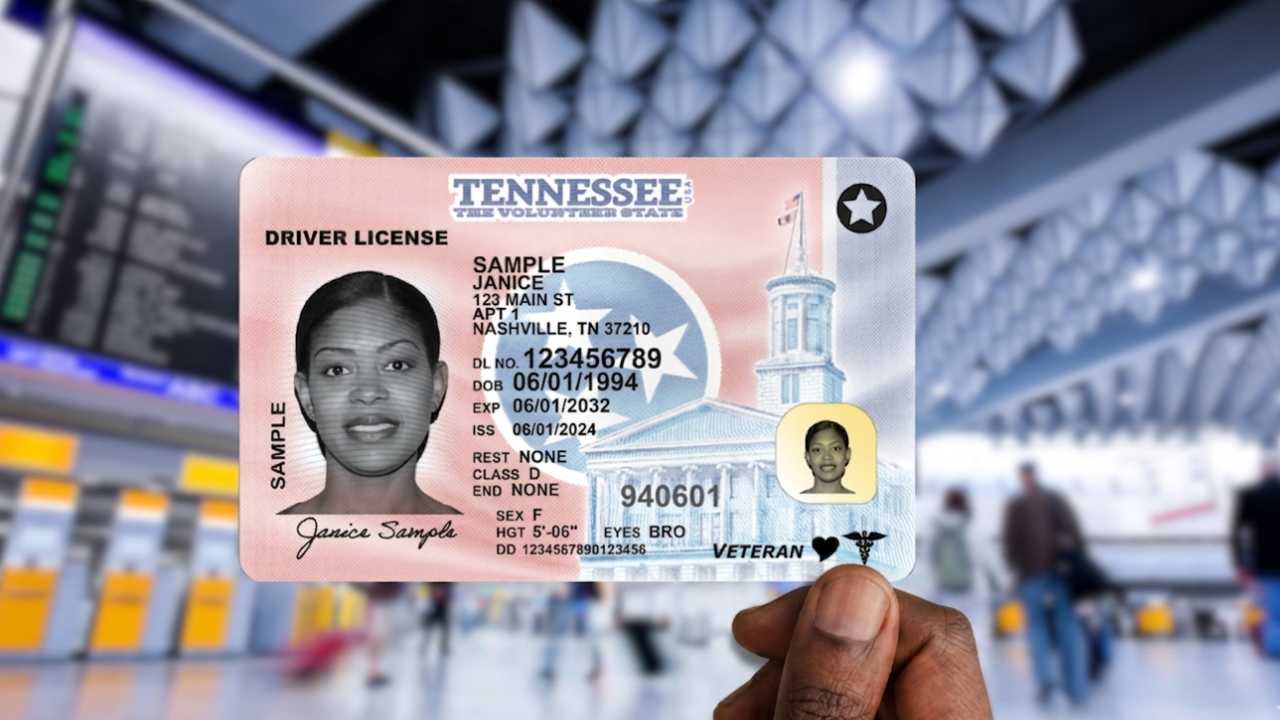
Since May 7, 2025, flying domestically in the United States without a REAL ID-compliant license — or a passport — can get you pulled from the security line. This isn’t a future warning. It’s already happening, and the numbers back it up.
The TSA reported more than 5,000 weekly denials at checkpoints during the third quarter of 2025. Since February 1, 2026, travelers who show up at the airport without valid ID face a $45 non-refundable fee and a verification process that can take 30 minutes or longer — with no guarantee they’ll make it through.
REAL ID after May 7, 2025: What changed for travelers
Congress passed the REAL ID Act the same year as the 9/11 Commission’s final report. The commission had warned that it was too easy to obtain fraudulent driver’s licenses in the U.S., and lawmakers responded with a federal standard for state-issued IDs.
What followed was two decades of delays. State implementation costs were estimated at $11 billion in 2007. Technical hurdles, political resistance, and eventually the COVID-19 pandemic pushed the deadline back repeatedly. It wasn’t until 2020 — 15 years after the law passed — that all 50 states began issuing compliant IDs.
The Trump administration, which took office in January 2025, made enforcement a stated priority under Secretary Kristi Noem. When Kentucky state senators requested yet another extension in April 2025, citing overwhelmed DMV offices, the TSA declined and held the date.
How to tell if your license already qualifies
If you’ve renewed your license in the last few years, it may already be compliant, and you might not know it. Look for a star in the upper right corner of your card. In California, the symbol is a gold bear with a star. In most other states, it’s just a star — gold or black depending on the state.
No star means the card won’t work at TSA checkpoints for domestic flights. But you have alternatives. A valid U.S. passport or passport card, a permanent resident card, a military ID, or a Global Entry card are all accepted. Five states — Michigan, Minnesota, New York, Vermont, and Washington — issue Enhanced Driver’s Licenses that work as substitutes even without the star marking.
What actually happens at the airport without the right ID
Travelers arriving without acceptable identification are handed a red slip and diverted to secondary screening. In Q3 2025, TSA logged more than 5,000 such cases per week before mitigation measures reduced the volume.
The TSA ConfirmID program, launched February 1, 2026, offers a fallback — for a price. Travelers pay $45 upfront, submit to additional identity checks, and if approved, receive a 10-day travel clearance. The TSA has been explicit that approval isn’t guaranteed and that the process adds at least 30 minutes to your airport experience.
The fee is non-refundable regardless of outcome. Children under 18 traveling domestically are exempt from the ID requirement. The adult accompanying them is not.
DMV backlogs that caught people off guard
The months leading up to the May deadline created a surge at motor vehicle offices nationwide. In Pennsylvania, Oregon, and Kentucky, appointment slots disappeared weeks in advance. Texas reported wait times running 20% longer than usual into the fall of 2025.
One detail that tripped up a significant number of travelers: the TSA does not accept the temporary paper receipt issued by DMVs while the permanent card is being processed. If your card is in the mail, the paper slip won’t get you through security.
The rule change that eliminated the old grace period
Before May 7, 2025, TSA allowed travelers to use state-issued IDs expired by less than a year. That window is gone. Any expired state driver’s license or ID — regardless of how recently it lapsed — is now rejected at domestic checkpoints.
One exception remains for other document types: the TSA still accepts passports and certain federal IDs up to two years past their expiration date.
The equity problem that federal agencies acknowledge
The Department of Homeland Security has admitted publicly that people without easy access to DMVs, without stable documentation, or without the ability to take time off work are disproportionately affected by strict enforcement.
Civil liberties organizations have raised a longer-term concern: that REAL ID, combined with growing biometric screening at airports, is moving toward a de facto national ID system — something the U.S. has historically avoided.
Fourteen states launched digital ID options through Apple Wallet in November 2025. That’s a meaningful step, but digital IDs are not universally accepted across all federal contexts.
What to do before your next domestic flight
Check the upper corner of your license today. If there’s no star, find your passport. If you have neither, budget extra time and consider prepaying the TSA ConfirmID fee before you get to the airport — though the $45 buys you a process, not a boarding pass.
If you have weeks before you fly, schedule a DMV appointment now. Processing times in high-demand states are still longer than normal.
Ninety-four percent of passengers are already showing up with acceptable ID, according to TSA figures. The remaining six percent are learning the hard way that this deadline, unlike the previous ones, didn’t move.
Sources: TSA.gov, Department of Homeland Security, PBS NewsHour / AP, NPR, CBS Atlanta. Reporting current as of May 2025.