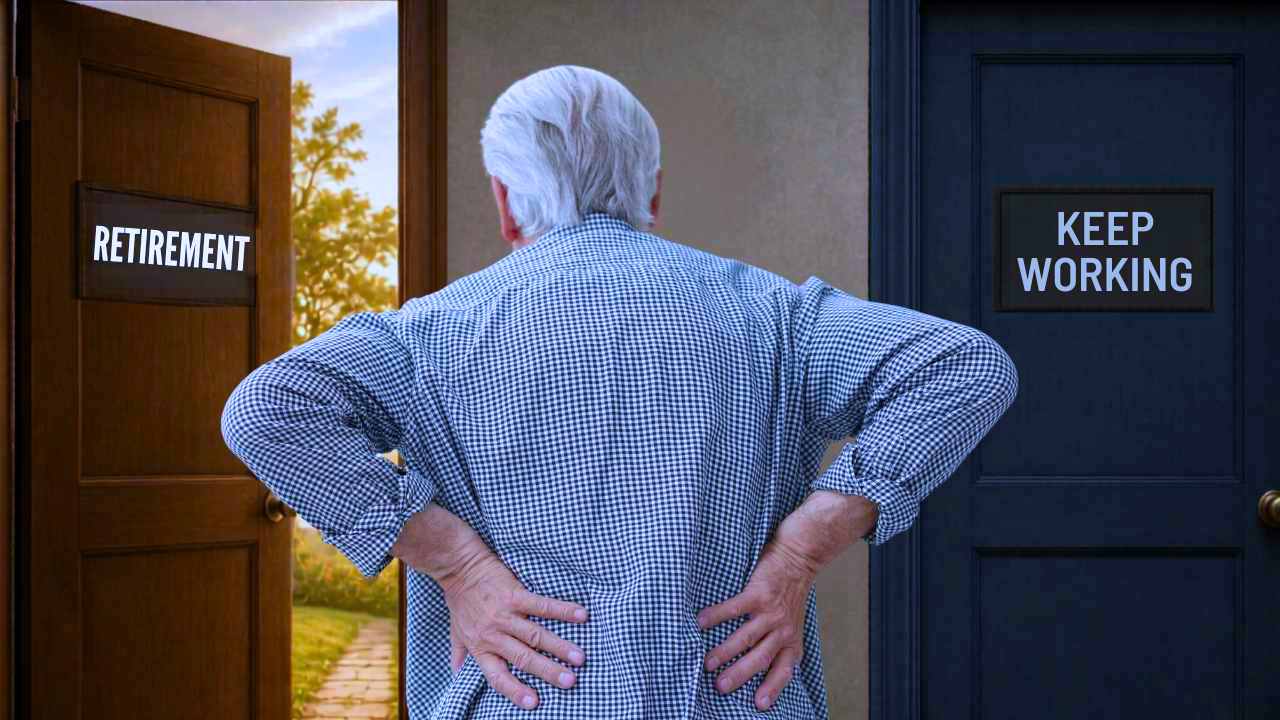
Many Americans set their sights on 62 because it’s the earliest age to claim Social Security retirement benefits. For others, the timing isn’t really a choice at all. A 2025 survey by the Employee Benefit Research Institute and Greenwald Research found that roughly 4 in 10 retirees left the workforce earlier than they had planned.
Stopping work before you’re ready — financially or otherwise — can trigger lasting damage to your income, health coverage and long-term security that many people don’t see coming until it’s too late.
Workers between 55 and 64 who lose a job are less likely than younger workers to find new employment, and more likely to exit the labor force through retirement, according to a 2025 review of federal labor data by the Government Accountability Office.
You can file for Social Security, but you’ll get less – permanently
Claiming at 62 cuts your benefit by as much as 30% compared to full retirement age (67 for those born 1960 or later). Wait until 70, and you get an 8% increase for each year you delay.
“I suggest everyone consider waiting if they can,” says CFP Rob Williams. Before deciding, look at your full income picture: savings, pensions, and how it affects a spouse’s options. Claiming Social Security the moment you retire at 62 is accepting a permanent pay cut. “Run through the scenarios,” Williams advises. “That Social Security decision is a very important one.”
You may live longer than you’re counting on
The biggest financial miscalculation among people who retire at 62 is underestimating how long their money needs to last. An American who reaches 62 can expect 20+ more years on average – 20 for a man, 23 for a woman.
“Much of the population is living much longer than in the past,” says Alicia Munnell of Boston College. That means supporting yourself far longer than you anticipated. Fidelity estimates a 65‑year‑old man needs $172,500 in after‑tax savings just for out‑of‑pocket medical expenses. Working even one additional year shifts the calculation significantly.
“In my view, working longer is the most important thing you can do to have a secure retirement,” Munnell says. “It gives you higher monthly Social Security benefits, lets you wait to access Medicare, allows your 401(k) to keep building, gives you time to pay off your mortgage, and reduces the number of years you have to sustain yourself on your savings.”
You can’t enroll in Medicare yet
Retiring at 62 means finding and paying for health coverage on your own for at least three years, until Medicare eligibility begins at 65. That gap has a real price tag. “Covered employees are used to paying premiums through their paychecks and getting more attractive rates,” Williams says. “That may not be the case in the private market.”
Options exist but aren’t cheap. COBRA lets you stay on your former employer’s plan for 18 to 36 months, but you’ll pay the full premium plus up to 2% administrative charge. ACA marketplace plans cover pre‑existing conditions; depending on your income, premium tax credits can help.
People with very low incomes may qualify for Medicaid – in most states, the threshold is 138% of the federal poverty level ($22,025 for a single person in 2026). More than 1,400 community health centers charge fees on a sliding scale.
Retirement is expensive – Inflation keeps eating
Inflation doesn’t stop when the paychecks do. Since early 2020, overall consumer prices have climbed roughly 25%. “Just because you can transition to a fixed income at today’s prices doesn’t mean you’ll be comfortable after 10 or 20 years of prices going up,” says Chris Manske.
The Federal Reserve’s inflation target is 2%, and the rate hovered between 2 and 3% throughout 2025. Building in an extra 2–3% savings cushion before you retire can make a meaningful difference.
You might miss work more than you expect
Work isn’t just a paycheck. It structures your days, sustains social connections, and provides a sense of purpose. “A lot of people don’t know what to do with their time. A lot of people retire and they hate it,” Williams says. Retirement planning isn’t only about the numbers – it also means deciding what life actually looks like afterward. That doesn’t happen by itself.