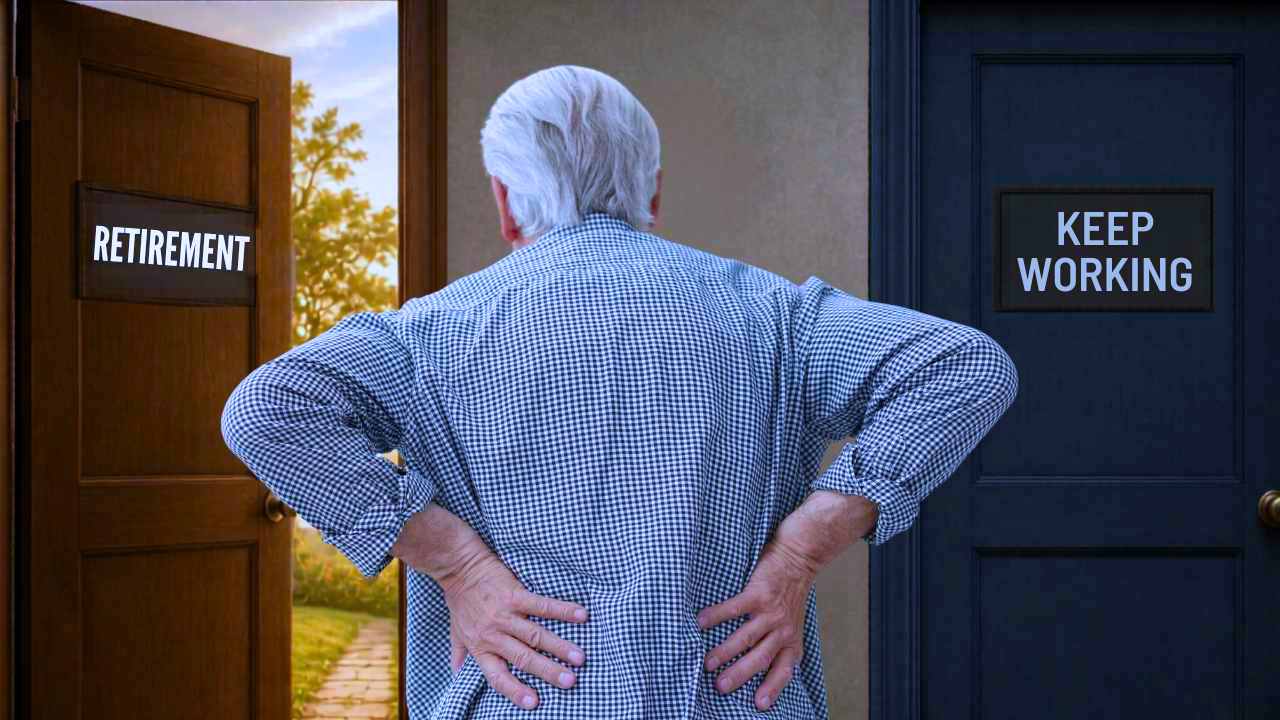
There is one question millions of Americans wrestle with every year, and the answer can mean hundreds of dollars more or less each month for the rest of their lives. At what age should you retire to avoid losing any portion of the benefit you spent decades earning?
The answer has a name: Full Retirement Age, also shortened as FRA. It is the only point at which Social Security pays out the full 100% of what each worker is owed, with no reductions and no penalties attached.
Why your Full Retirement Age can change everything
Full Retirement Age is the threshold a worker must reach to receive the complete monthly benefit they have earned. It is not a single number that applies to everyone. Workers born between 1943 and 1954 have an FRA of 66. Those born between 1955 and 1959 fall on a sliding scale that rises gradually to 66 years and 10 months. Anyone born in 1960 or later has an FRA of 67.
For the vast majority of today’s active workforce, that number is 67 years old. That’s the current FRA point in 2026, a number that have been raised for years, following the aging population of America and the increment in life expectancy.
The cost of claiming early — and the reward for waiting
Social Security penalizes those who claim before their FRA and rewards those who hold off. Workers born in 1960 or later who begin collecting at 62 receive only 70% of their full benefit — a permanent 30% reduction that does not reverse with time. That cut follows the retiree for life.
On the other side of the equation, those who delay past their FRA gain roughly 8% in additional benefit for each year they wait, up to age 70. Holding off until 70 can push monthly payments up to 24% higher than what a worker would have collected at full retirement age.
What the actual numbers look like in 2026
For workers retiring at their FRA this year, the maximum possible benefit sits at $4,152 per month. Those who claim at 62 in 2026 cap out at $2,969. Workers who hold off until 70 can reach $5,181 per month.
The gap between claiming at 62 and waiting until 70 exceeds $2,200 per month. Stretched across a twenty-year retirement, that difference can surpass half a million dollars in total lifetime income.
Choosing when to claim Social Security is not administrative paperwork. It is one of the most financially significant decisions a retiree will make. The right age depends on individual health, other income sources, and realistic life expectancy projections. For married couples, financial planners consistently point out that delaying the higher earner’s claim is almost always the stronger move — particularly because of how it affects the surviving spouse’s benefit down the road.
Anyone who wants to collect what they actually earned — without surrendering a percentage to the calendar — needs to know their FRA precisely. That number, set by birth year, is the variable that determines everything else.
A 42-year chapter that closes in 2026
This year carries added weight in the history of American retirement policy. In November 2026, the FRA will reach 67 for everyone born in 1960 or later — the final step in a process that began with the 1983 amendments to the Social Security Act.
That legislation, passed more than four decades ago, was designed to reflect rising life expectancy and ease the long-term financial pressure on the program’s trust fund. The transition took 42 years to complete. It ends this year.